
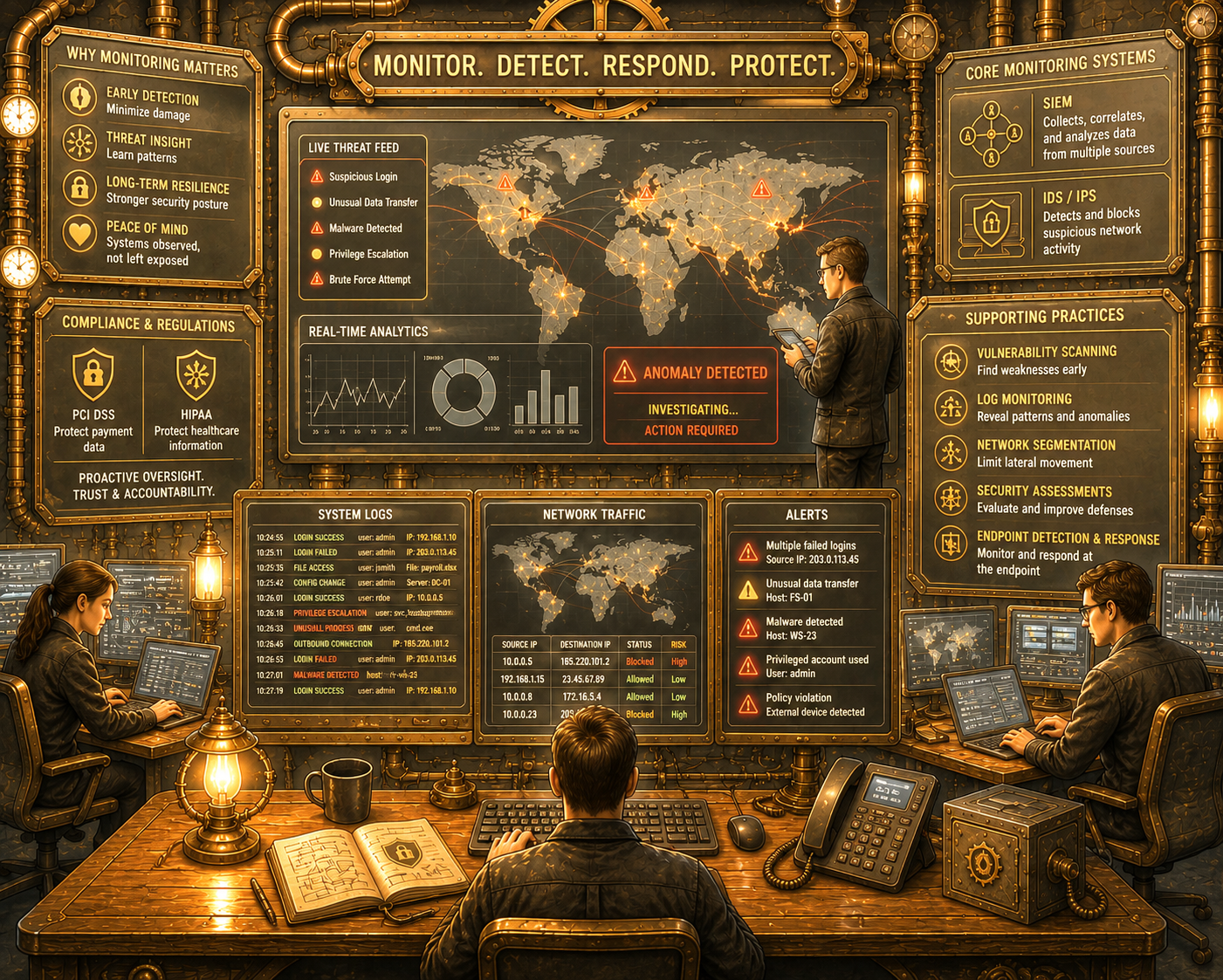
In an increasingly connected world, monitoring for suspicious activity has become one of the most essential components of a well-rounded cybersecurity strategy. It is no longer enough to simply build defenses and hope they hold; organizations and individuals alike must remain actively aware of what is happening within their systems. The ability to identify unusual behavior early can make the difference between a minor incident and a major disruption. When potential threats are detected in their early stages, there is a valuable window of opportunity to respond quickly and effectively, limiting damage and preserving critical data. From a practical standpoint, this kind of vigilance provides not only immediate protection but also long-term insight. Each detected anomaly or attempted breach can reveal patterns, tactics, and vulnerabilities that might otherwise go unnoticed. Over time, this creates a more informed and resilient security posture. On a more personal level, there is a certain reassurance that comes from knowing that systems are not just protected, but actively observed and understood, rather than left exposed to silent risks.
Another important dimension of monitoring is its role in compliance and regulatory requirements. Certain industries are obligated to maintain strict oversight of their systems to protect sensitive information, particularly when it involves financial or healthcare data. Standards such as Payment Card Industry Data Security Standard and Health Insurance Portability and Accountability Act explicitly require organizations to implement monitoring practices that can detect and respond to suspicious activity. These requirements are not arbitrary; they are designed to ensure that organizations take a proactive stance in safeguarding data that could have serious consequences if compromised. Even outside of regulated industries, adopting similar practices can significantly strengthen overall security. Compliance frameworks often reflect lessons learned from real-world incidents, meaning that following them can help prevent common mistakes. In this sense, monitoring becomes not just a technical function, but part of a broader commitment to accountability and trust. It signals that protecting data is taken seriously and that systems are designed with both prevention and response in mind.
At the core of effective monitoring are the tools and systems that make it possible to collect, analyze, and interpret large volumes of data. One of the most widely used approaches involves Security Information and Event Management systems, which aggregate information from multiple sources and provide real-time analysis to identify potential threats. These systems act as a central hub, bringing together logs, alerts, and other data points into a unified view that can be monitored continuously. Complementing this approach are intrusion detection and prevention systems, which focus on analyzing network traffic to identify signs of unauthorized access or malicious activity. Together, these tools create a layered perspective, allowing security teams to detect both obvious and subtle indicators of compromise. What makes this especially valuable is the ability to move from reactive to proactive security. Instead of waiting for something to go wrong, organizations can identify warning signs and take action before an incident escalates. While the technology behind these systems can be complex, their purpose is straightforward: to provide clarity in an environment where threats are constantly evolving.
Beyond centralized monitoring systems, there are several supporting practices that strengthen visibility and control. Regular vulnerability scanning plays a key role in identifying weaknesses that attackers could exploit, offering an opportunity to address issues before they become entry points. Monitoring system logs is another valuable practice, as these records can reveal patterns of user activity, configuration changes, and potential anomalies that might otherwise remain hidden. Network segmentation adds an additional layer of protection by separating critical systems from less sensitive ones, effectively limiting the reach of any potential breach. Security assessments further contribute by evaluating the overall strength of an organization’s defenses and highlighting areas for improvement. On the endpoint level, Endpoint Detection and Response systems provide focused monitoring of individual devices such as desktops, laptops, and mobile phones, ensuring that threats are detected even at the edges of the network. When combined, these practices create a comprehensive monitoring environment that addresses risks from multiple angles, reinforcing the overall security framework in a practical and measurable way.
An increasingly important aspect of modern monitoring is the use of behavioral analysis to detect anomalies that traditional tools might miss. By examining patterns in how users interact with systems, it becomes possible to identify unusual behavior that could indicate a potential threat, even if no explicit rule has been violated. This approach, often referred to as User Behavior Analytics, adds a more adaptive layer to security by focusing on deviations from normal activity rather than relying solely on predefined signatures or alerts. For example, a sudden change in login patterns, unexpected data access, or unusual system usage can all serve as early indicators of compromise. From a practical perspective, this kind of insight feels more intuitive, as it mirrors how we naturally notice when something seems “off” in everyday situations. Integrating behavioral analytics with traditional monitoring tools creates a more dynamic and responsive system, one that is better equipped to handle both known and emerging threats. Ultimately, monitoring for suspicious activity is not just about technology; it is about awareness, adaptability, and the willingness to continuously refine how we protect what matters most.
